Choosing a Personal Trainer in Winter Springs (and the Cost)
Searching for a personal trainer near Winter Springs? The credentials, questions, typical Central Florida prices, and red flags that separate good coaching from an expensive guess.
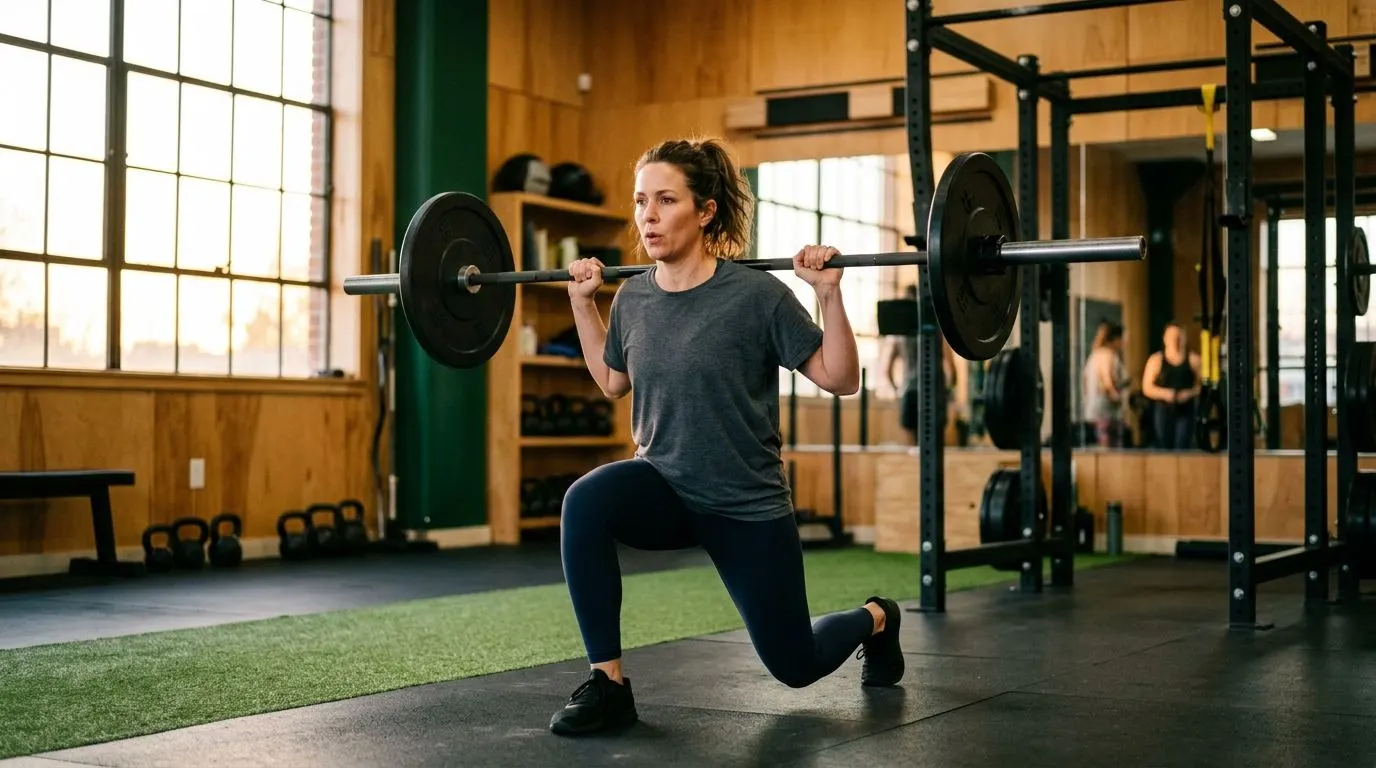
Look for a certification from a nationally accredited body (NASM, ACE, NSCA, or ACSM), liability insurance, a real assessment before your first workout, and written, progressive programming instead of random workouts. Ask about experience with your age, goals, and health history. Around Winter Springs and Central Florida, private training typically runs 60 to 120 dollars per hour, large-gym trainer packages roughly 35 to 90 dollars per session, and small group training 15 to 45 dollars per person per session.
Search "personal trainer near me" from anywhere in Winter Springs and you will get pages of results: big-box gyms along State Road 434, boutique studios, independent trainers who drive between Oviedo and Casselberry, and marketplace apps promising a vetted professional in your living room. Almost all of them have four and a half stars. Almost none of the listings tell you what actually predicts whether you will be stronger, healthier, and still training a year from now.
Choosing a trainer is a real investment of money, time, and trust, and most people make the decision on proximity and vibes. This guide covers what to look for, the questions worth asking before you sign anything, what training typically costs around Central Florida, and the warning signs that should send you somewhere else.
What should you look for in a personal trainer?
Start with the basics that are easy to verify. A credible trainer holds a certification from a nationally accredited organization, most commonly NASM, ACE, NSCA, or ACSM, keeps current CPR and AED training, and carries liability insurance. None of that guarantees great coaching, but the absence of any of it is disqualifying. Florida does not license personal trainers, so the burden of checking falls on you.
From there, three things separate professionals from enthusiastic amateurs:
- An assessment before any workout. A good coach wants to see how you move, where you are starting from, and what your health history looks like before writing a single set. If the first session is a hard workout with no evaluation, your program is being guessed at.
- Written, progressive programming. Ask to see what a training block looks like. Real programs build deliberately from week to week. A different random workout every session might leave you sweaty, but it rarely leaves you stronger.
- Experience with people like you. A trainer who mostly coaches 25-year-old athletes may be wonderful and still be the wrong fit for a 52-year-old woman managing perimenopause, a cranky shoulder, or an osteopenia diagnosis.
That last point matters more than most people realize. A goal like rebuilding bone density responds well to strength training, but only when it is programmed and supervised properly. The LIFTMOR trial, for example, found that heavy, closely supervised resistance training improved bone density in postmenopausal women with low bone mass, with a strong safety record precisely because supervision was built in. We cover this in depth in our guide to strength training for bone density and osteopenia. For medical topics like bone density, menopause symptoms, or joint pain, involve your physician, and make sure any trainer you hire is willing to work alongside that guidance rather than around it.
The questions most people forget to ask
Most consultations cover schedule and price. These questions get at quality:
- What does your assessment process look like? You want specifics: movement screening, strength baselines, health and injury history, goal setting.
- What will my program look like in week six? A coach with a plan can answer this. A coach who improvises cannot.
- Who do you mostly work with? Listen for people who share your age range, goals, and starting point.
- What happens if something hurts? The right answer involves modifying, regressing, and communicating, not pushing through.
- How do you handle nutrition? Sensible guidance is a plus. Meal plans from someone without the credentials to write them, or pressure toward extreme restriction, is not.
- What are your credentials, and are you insured? Any hesitation here is your answer.
- What does success look like in three months, and how will we measure it? Vague promises are a warning sign. Specific, measurable markers are a good one.
What does personal training cost in Central Florida?
Prices vary with format, experience, and setting, but these are the typical ranges you will see across Winter Springs, Oviedo, Longwood, Casselberry, and up toward Lake Mary and Sanford:
- Private one-on-one training: commonly 60 to 120 dollars per hour, with experienced coaches and specialized work (postpartum, bone density, athletic development) at the higher end.
- Trainer packages at large gyms: directories and package pricing often work out to roughly 35 to 90 dollars per session, usually sold in bundles on top of your membership.
- Small group training: typically 15 to 45 dollars per person per session, which is why it has become the value sweet spot for people who want hands-on coaching without a fully private price.
Two cautions when you compare. First, compare the whole picture: session length, group size, whether an assessment is included, and whether the programming is individualized. A 30 minute session priced like a 45 minute one is not a bargain. Second, the cheapest option is rarely the cheapest. Six months with a trainer running random workouts costs more than three months with one who gets you measurably stronger. If you are weighing formats, our breakdown of small group training versus personal training walks through who each one suits best.
Big gym, dedicated studio, or a training app: what is the difference?
Trainers at large gyms can be excellent, and the convenience is real if you already hold a membership there. The trade-offs are structural: high trainer turnover, sales quotas that shape the conversation, and quality that varies widely because coaching is a department, not the business.
Dedicated training studios exist only to coach, so assessment, written programming, and coach continuity tend to be the core product rather than an add-on. Sessions are usually appointment based, groups stay small, and you are far more likely to work with the same coach for years. You typically pay more per session than a big-gym bundle and get considerably more attention for it.
Marketplace apps and in-home trainers offer flexibility, which matters if you are juggling caregiving or a commute between Winter Springs and downtown Orlando. Vetting varies by platform, equipment is limited to what you own, and continuity depends entirely on the individual, so the interview questions above matter even more.
Red flags worth walking away from
Trust your read on people, and take these seriously no matter how charming the pitch:
- No assessment, or a "let's just jump right in" first session.
- A pain-is-progress attitude. Soreness happens, but being hurt is not a training method.
- Crash diets, extreme restriction, or a hard push on supplements beyond the trainer's scope.
- No written program, or workouts that feel randomly generated.
- Pressure sales: long contracts pushed at the first meeting, today-only discounts, guilt as a closing technique.
- Programming that ignores your history. If you mention a knee replacement and the plan does not change, leave.
What this looks like at Valdes Performance
We built Valdes Performance in Winter Springs around the same standards this guide asks you to hold everyone to, including us. Every membership starts with a one-on-one movement assessment before you touch a barbell. Programming is written and progressive, sessions run a full 45 minutes, and small group strength is capped at six people so coaching never gets diluted. Founder and head coach Cristina Valdes built the studio for adults training for the long term, including many women navigating perimenopause and menopause, and members come from across Seminole County: Tuscawilla, Oviedo, Casselberry, Longwood, and Sanford.
If you are still comparing options, we would honestly rather you ask every studio on your list these questions, because informed clients make the best training partners. When you are ready, book a free consultation. We will assess where you are, answer everything in this guide as it applies to you, and walk through membership options without any pressure. Stronger for life starts with choosing well.
Questions, answered
In Winter Springs and the surrounding Central Florida area, private one-on-one training commonly runs 60 to 120 dollars per hour. Trainer packages at large gyms often work out to roughly 35 to 90 dollars per session, sold in bundles. Small group training typically costs 15 to 45 dollars per person per session and is often the best value for coached strength work.
Look for a certification from a nationally accredited organization such as NASM, ACE, NSCA, or ACSM, plus current CPR and AED training and liability insurance. Florida does not license personal trainers, so verifying credentials is up to you. Certification is a floor, not a ceiling: also ask about experience with your specific goals, age group, and health history.
Walk away from any trainer who skips an assessment, treats pain as proof of progress, pushes crash diets or supplements beyond their scope, runs random workouts with no written plan, or uses pressure tactics like today-only discounts and long contracts at the first meeting. A quality coach assesses first, programs deliberately, and lets you decide without pressure.
Not automatically, but the odds differ. At a dedicated studio, coaching is the entire business, so assessments, written programming, and coach continuity tend to be standard. Big-gym trainers can be excellent, but turnover and sales quotas are common and quality varies widely. Ask the same questions in both settings: assessment process, programming, and experience with clients like you.
Yes. An assessment shows your coach how you move, where your strength baseline sits, and what your health history requires, which is the raw material of a safe, effective program. It matters most for goals like bone density, joint issues, or training through menopause. If a trainer wants to skip straight to a hard workout, keep looking.