Strength Training Through Menopause: How Often and How Heavy
Muscle loss accelerates in perimenopause, but two to three well-designed strength sessions a week can reverse it. How often, how heavy, and how to begin safely.
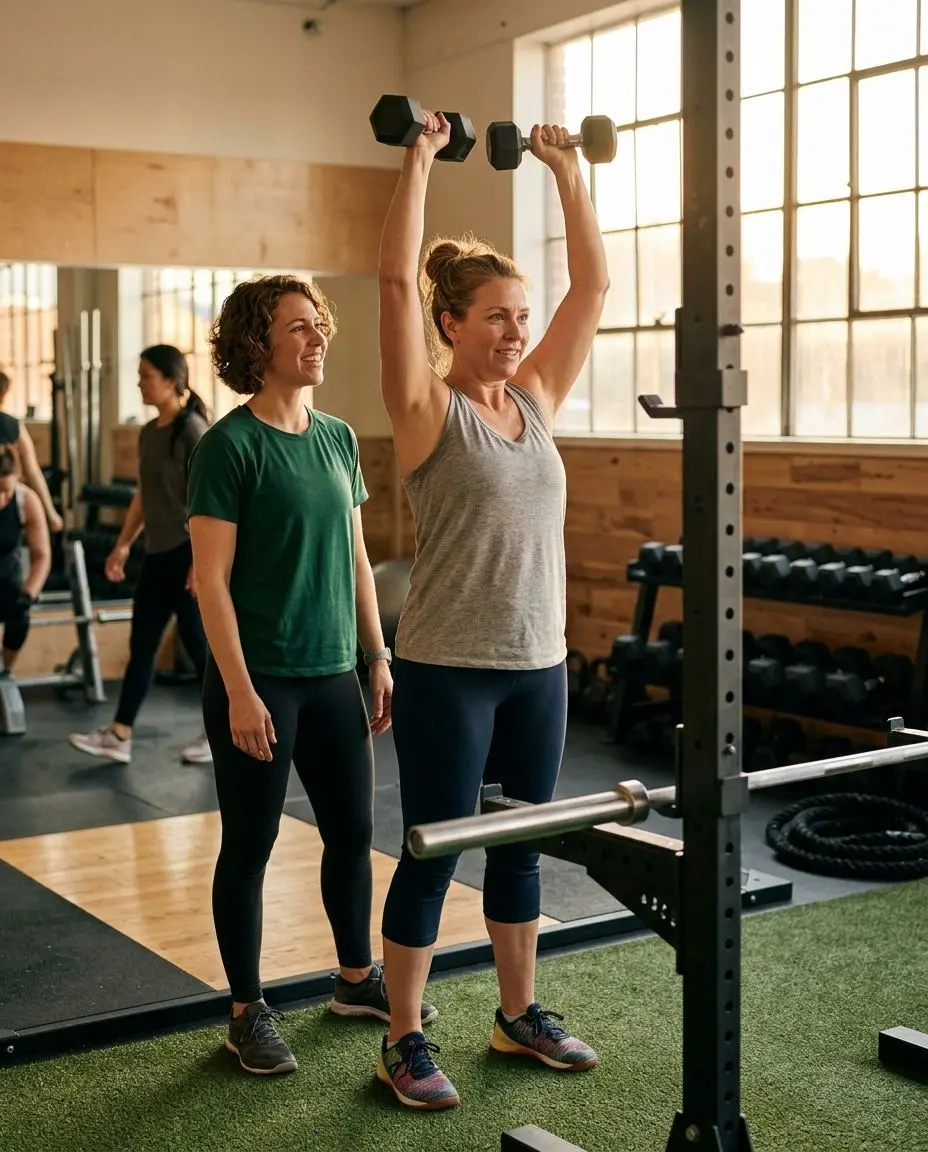
Most women do best with two to three full-body strength sessions per week during perimenopause and menopause, lifting weights heavy enough that the last two or three reps of each set feel hard. Muscle loss accelerates in the menopause transition (adults lose roughly 3 to 8 percent of muscle per decade after 30), and progressive resistance training is the most reliable way to reverse it. Leave 48 to 72 hours between sessions, prioritize protein, and expect visible change in 8 to 12 weeks.
Somewhere in the perimenopause years, many women notice that the rules changed without warning. Workouts that used to work stop working. Strength fades faster, recovery takes longer, and body composition shifts even when nothing about your habits has. If that sounds familiar, nothing is wrong with you. Your physiology has changed, and the training that serves you best needs to change with it.
The encouraging part is that the research here is unusually clear. Strength training is the most effective tool women have for protecting muscle, bone, and metabolic health through menopause. Here is how often to lift, how heavy to go, and how to start safely if it has been a while.
Why am I losing muscle in perimenopause?
Adults lose roughly 3 to 8 percent of their muscle mass per decade after age 30, a slow decline called sarcopenia. For women, that decline accelerates in late perimenopause as estrogen falls. Estrogen is not only a reproductive hormone. It supports muscle repair and maintenance, so as levels drop, muscle becomes harder to keep and slower to build. Researchers describe this as anabolic resistance: the same workout now produces a smaller result than it did at 30.
The same hormonal shift affects your skeleton, because the years surrounding menopause are also when bone density declines most quickly. Muscle and bone are lost together, and the good news is that they are rebuilt together. We cover that side of the story in our guide to strength training for bone density and osteopenia.
This reframing matters. You are not losing muscle because you got lazy or your metabolism broke. You are losing it because a hormonal support system is stepping back, and the answer is to replace that support with a stronger, more deliberate training signal.
Is it too late to build muscle after menopause?
No, and this may be the most important sentence on this page. Research consistently shows that women in their 50s, 60s, and 70s build measurable muscle and strength when they follow a progressive resistance training program. The machinery for building muscle never disappears. It simply needs a clearer stimulus, more consistency, and better recovery than it did two decades ago.
What shrinks with age is the margin for error, not the potential. Sporadic workouts that once maintained your strength no longer will, which is why structure matters more now than at any other point in life. If you are coming back after years focused on career and caregiving, our guide to getting back into fitness after 50 walks through those first steps in detail.
Set honest expectations on timing. Strength improves within the first few weeks, largely because your nervous system learns to use the muscle you already have. Visible change in muscle tone and body composition typically arrives around 8 to 12 weeks of consistent training. Give it a full season before you judge the results.
How many days a week should you strength train?
Two to three full-body sessions per week is the frequency that matches research consensus for women in midlife, and it is what works for most women we meet across Seminole County. The key detail is spacing: leave 48 to 72 hours between strength sessions, because muscle is built during recovery, and recovery runs slower through the menopause transition.
A sustainable week often looks like this:
- Monday: full-body strength session built around compound movements.
- Tuesday: brisk walk, bike ride, swim, or another easy cardio session.
- Thursday: second full-body strength session, progressing the loads slightly.
- Saturday: optional third strength session, or something active you genuinely enjoy.
Resist the urge to do more at the start. Two sessions you sustain for a year will outperform five sessions you abandon by March. Consistency, not volume, is what changes bodies in this decade.
How heavy should you lift?
Heavier than most women have been told, and almost certainly heavier than the tiny dumbbells that dominate so much fitness content aimed at women. Muscle and bone adapt to meaningful load. A practical rule: by the last two or three repetitions of each set, the weight should feel hard while your form stays clean. If you could easily do ten more reps, the signal is too quiet to force adaptation.
Build sessions around compound movements, the lifts that train many muscles at once and mirror real life: squats, hip hinges and deadlift variations, presses, rows, and loaded carries. Then apply progressive overload, which simply means gradually asking a little more of yourself over time, another rep this week, a slightly heavier weight next month.
If lifting heavy sounds risky at this stage of life, the evidence is reassuring. The LIFTMOR trial studied postmenopausal women with low bone mass performing heavy, supervised resistance training and found it both safe and effective, improving bone density where lighter programs had not. The operative word is supervised. Skilled coaching on technique, especially in your first 90 days, is what makes heavier lifting safe. And if you are managing osteoporosis, joint pain, or menopause symptoms with medication or hormone therapy, bring your physician into the conversation before you begin. Good training works alongside good medicine, not instead of it.
Is cardio or strength training better during menopause?
You need both, but they are not interchangeable, and if you must prioritize, strength wins. Cardio protects your heart, supports mood and sleep, and helps manage the stress load of midlife. What it cannot do is rebuild lost muscle or load your bones enough to strengthen them. Strength training addresses the specific losses of menopause directly, which is why it belongs at the center of the plan, with cardio arranged around it rather than the reverse.
One more lever deserves mention: protein. Because of anabolic resistance, protein matters more with age, not less. Many researchers now suggest midlife women aim meaningfully higher than the standard minimums, and a simple starting point is a substantial serving of protein, roughly 25 to 30 grams, at each meal. Muscle is built from training plus raw material plus rest. Shortchange any of the three and progress stalls.
What this looks like at Valdes Performance
Every membership at Valdes Performance begins with a one-on-one movement assessment, which matters most for women navigating perimenopause or returning to training after years away. We look at how you move, where you are starting from, and what your history asks us to respect before any load goes on the bar. From there, most women from Winter Springs, Oviedo, and Casselberry start in small group strength, capped at six people per 45 minute session, because careful form supervision matters most in the first 90 days.
Founder and head coach Cristina Valdes built the studio around the idea on our wall: stronger for life. Menopause is not the end of your strongest years. Handled well, it can be the beginning of them. If you are curious what two to three sessions a week could change by this time next year, book a free consultation and we will walk you through the options together.
Questions, answered
No. Research consistently shows women in their 50s, 60s, and 70s build measurable muscle and strength with progressive resistance training. The process is slower than at 30 and demands more consistency, recovery, and protein, but the capacity never disappears. Most women who train two to three times per week notice strength gains within weeks and visible change in roughly 8 to 12 weeks.
Two to three full-body strength sessions per week matches the research consensus. Leave 48 to 72 hours between sessions, since muscle adapts during recovery and recovery slows through the menopause transition. Fill the days between with walking, swimming, or other easy cardio. Two sessions you sustain all year will beat five sessions you abandon within a month.
Heavy enough that the final two or three repetitions of each set feel difficult while your form stays solid. Light weights are a fine starting point, but muscle and bone only adapt to meaningful load. The LIFTMOR trial found heavy, supervised lifting safe and effective for postmenopausal women with low bone mass. Progress gradually and get coaching on form early.
Adults lose roughly 3 to 8 percent of muscle per decade after 30, and the decline accelerates in late perimenopause as estrogen falls. Estrogen supports muscle repair and maintenance, so lower levels make muscle harder to keep and slower to build. This is physiology, not a personal failing, and progressive strength training plus adequate protein is the most reliable way to counter it.
You need both, but strength training is the priority if you must choose. Cardio protects your heart, mood, and sleep, yet it cannot rebuild lost muscle or load your bones enough to strengthen them. Strength training addresses the specific losses of menopause: muscle, bone, and metabolic health. A practical split is two to three strength sessions weekly with easy cardio between.