Can Osteopenia Be Reversed? Strength Training and Bone Density
An osteopenia diagnosis is a starting line, not a verdict. What your T-score means, how progressive lifting rebuilds bone, and the realistic timeline for change.
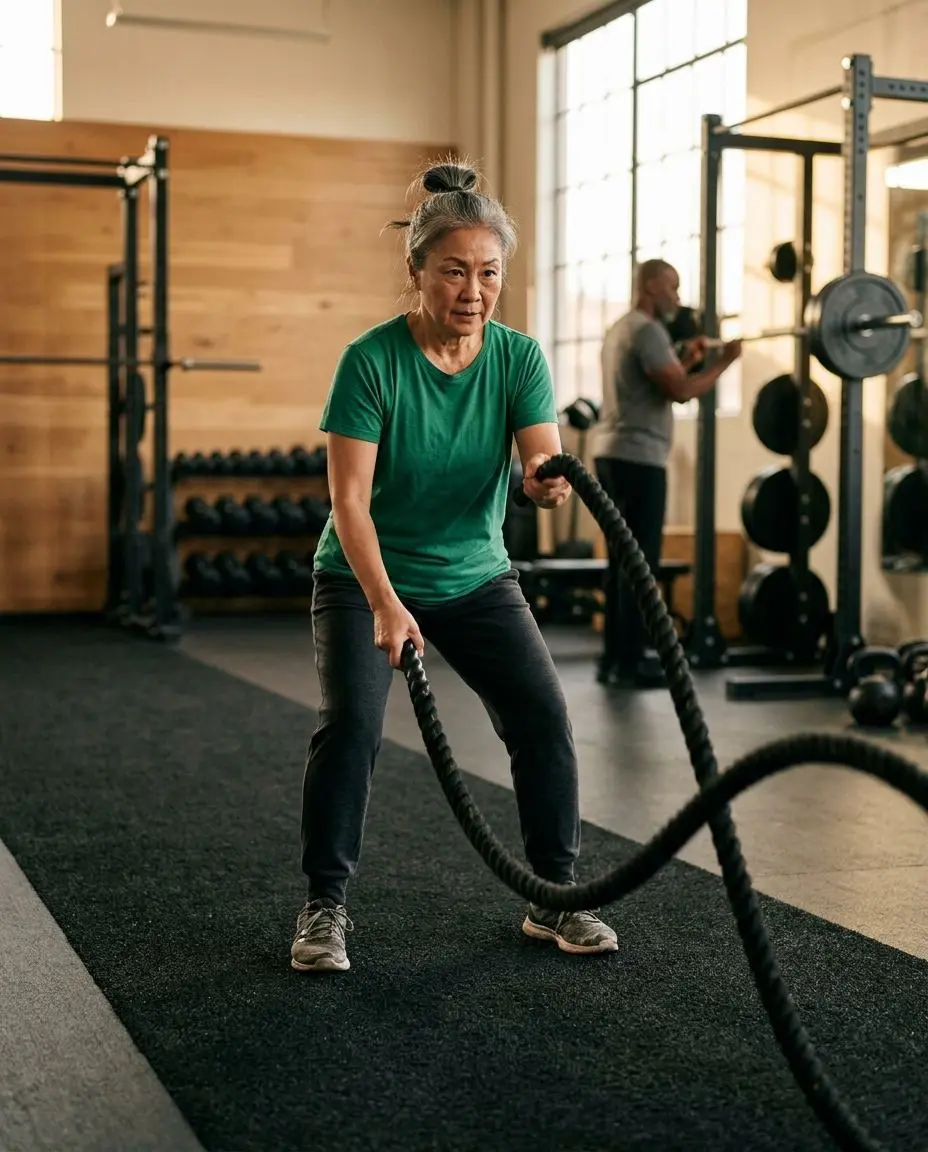
Yes, research consistently shows strength training can improve bone density and, in some cases, move an osteopenia diagnosis back toward the normal range. The LIFTMOR trial found that supervised heavy resistance and impact training safely improved bone density in postmenopausal women with low bone mass. Typical gains run 1 to 3 percent per year, and because bone remodels slowly, meaningful DEXA changes usually take 12 to 18 months. Supervision and gradual progression are the keys to doing it safely.
You did the responsible thing. You scheduled the DEXA scan, and the report came back with a word you may not have expected: osteopenia. Perhaps your doctor mentioned calcium and vitamin D, suggested a follow-up scan in two years, and the appointment ended. If that sounds familiar, you are not alone. Many women across Seminole County leave that appointment with a diagnosis in hand and no actual plan for what to do about it.
Here is the part that often goes unsaid: bone is living tissue, and it responds to training. The research is consistent and genuinely hopeful. Progressive strength training, done with good coaching, is one of the most effective tools we have for protecting and rebuilding bone in midlife and beyond. Let us walk through what your numbers mean and what to do next.
What does a DEXA T-score actually mean?
A DEXA scan measures bone mineral density, usually at the hip and spine, and reports it as a T-score. That number compares your bone density to the average of a healthy young adult. A T-score of -1.0 or higher is considered normal. Between -1.0 and -2.5 is osteopenia, which simply means lower than average bone mass. A score of -2.5 or below is osteoporosis.
Two things are worth holding onto. First, osteopenia is not a disease. It is an early warning, and early warnings are gifts because they arrive while you still have time to act. Second, the score is a snapshot, not a trajectory. What you do over the next year or two has real influence over where that number goes.
Can osteopenia be reversed with strength training?
For many people, yes. Bone follows a principle sometimes called Wolff's law: it adapts to the loads placed on it. When your muscles pull hard against your skeleton and meaningful weight moves through your hips and spine, specialized cells respond by laying down new, denser bone. When that stimulus is absent, the same system slowly dismantles bone it decides you no longer need.
This is why gentle activity alone rarely moves the needle. Walking is wonderful for many reasons, but for bone it mostly maintains the status quo. Building density requires loads that exceed what your skeleton is used to, applied gradually over time.
The strongest evidence here is the LIFTMOR trial, a randomized controlled study of postmenopausal women with low bone mass. Participants did brief, twice-weekly sessions of heavy resistance training plus impact work, all closely supervised. After eight months, their bone density at the spine improved and their hip measurements held or improved, while the comparison group doing a gentle home program continued to lose ground. Just as important, the safety record was excellent.
Realistic expectations matter. Typical gains from a well-run program land in the range of 1 to 3 percent bone mineral density per year. That sounds modest until you remember the alternative: untreated bone loss after menopause often runs 1 to 2 percent per year. Gaining 2 percent instead of losing 2 percent is a 4 percent swing in your favor, compounding year after year.
Which exercises build bone after menopause?
Not all movement counts equally. The exercises with the strongest evidence share one quality: they load the skeleton more than daily life does.
- Progressive resistance training. Squats, deadlifts, presses, and rows, loaded appropriately for your current level and progressed over time. These compound lifts send force through the hip and spine, exactly where fractures do the most damage.
- Impact work. Heel drops, gentle hops, and, when appropriate, jump and landing variations. Brief impact gives bone a signal that slow, smooth movement cannot.
- Balance and power training. Density is only half the fracture equation. Most fractures begin with a fall, so training reaction speed, coordination, and single-leg stability protects you as much as harder bone does.
- Postural strength. Back extension and loaded carry variations strengthen the muscles along your spine, supporting the vertebrae most affected by bone loss.
If you are also navigating disrupted sleep, hot flashes, or shifting body composition, this same training does double duty. We cover that intersection in our guide to strength training through menopause.
Is it safe to lift weights with low bone density?
This is the question that keeps most women on the sidelines, and the research answer is reassuring. In the LIFTMOR trial, women lifting heavy under supervision were as safe as the group doing gentle exercise at home. The operative word is supervision.
Safety comes from three things: a coach watching your technique, starting loads that respect where you are today, and progression measured in months rather than days. If your scan shows osteoporosis rather than osteopenia, a few movements deserve extra care:
- Rounding the spine under load, such as weighted crunches or toe touches while holding weight
- Fast, loaded twisting through the torso
- High-impact jumping, until you have built a base and been cleared for it
None of this means avoid movement. Inactivity accelerates bone loss faster than almost anything else. It means the exercise selection, the load, and the pace of progression should be chosen by someone qualified to make those calls. If you are evaluating coaches, our guide on how to choose a personal trainer in Winter Springs walks through the credentials and questions that matter. And because bone density is a medical matter, keep your physician in the loop: share your DEXA results with your coach and your training plan with your doctor.
How long until your T-score improves?
Bone works on a slower clock than muscle. A full remodeling cycle, where old bone is broken down and replaced with new, takes roughly 6 to 12 months. That is why most physicians look for meaningful DEXA change at the 12 to 18 month mark, not sooner. Rescanning at six months usually shows nothing, and that silence can feel like failure when it is simply biology mid-process.
The encouraging flip side is that other markers move quickly while you wait on the bone clock. Strength climbs within weeks. Balance sharpens. Posture improves. Stairs and grocery bags get easier. Every one of those changes lowers your fall risk immediately, which means your fracture risk is dropping long before the scan confirms it.
What this looks like at Valdes Performance
Every membership at Valdes Performance begins with a one-on-one movement assessment, which is exactly what a bone density goal requires. Bring your DEXA results. Founder and head coach Cristina Valdes uses that first session to understand your scores, your history, and how you actually move, then builds a starting point that respects all three. From there, most members train in small group strength sessions capped at six people, 45 minutes each, small enough that every rep gets coached and loads progress on evidence rather than guesswork.
If you are in Winter Springs, Oviedo, Casselberry, or Longwood and a recent scan has you wondering what comes next, do not let the report sit in a drawer. Membership options are walked through at a free consultation, and the conversation costs nothing. Schedule your free consultation and turn a diagnosis into a plan. Stronger for life is not a slogan here; it is the point.
Questions, answered
Often, yes. Osteopenia means bone density is lower than the young adult average but not yet in the osteoporosis range, and bone responds to progressive loading at any age. Research, including the LIFTMOR trial, shows supervised resistance and impact training can improve density by roughly 1 to 3 percent per year. Even holding steady is a win, since untreated bone loss after menopause often runs 1 to 2 percent annually.
For most people, yes, when the program is supervised and progressed gradually. The LIFTMOR trial ran heavy, supervised lifting with postmenopausal women who had low bone mass and reported an excellent safety record. The keys are qualified coaching, conservative starting loads, and careful technique. Movements that round the spine under load and abrupt high-impact work need modification. Always coordinate with your physician first.
Plan on 12 to 18 months of consistent training before a follow-up DEXA is likely to show meaningful change. Bone remodels in slow 6 to 12 month cycles, so rescanning sooner often shows nothing and can be discouraging. In the meantime, track the markers that move faster: strength, balance, posture, and confidence. Those improvements also lower fall risk, which matters as much as the score itself.
With osteopenia, most exercise is on the table with sensible progression. With osteoporosis, be cautious with loaded spinal flexion (weighted crunches or toe touches with weight), fast twisting under load, and high-impact jumping until a qualified coach and your physician clear them. The goal is not avoiding movement, which accelerates bone loss, but choosing well-coached versions of the lifts that load your hips and spine safely.
Walking is excellent for your heart, joints, and mood, but research shows it is generally not a strong enough stimulus to build bone on its own. Bone adapts to loads that exceed what it experiences daily, which is why progressive resistance training and appropriate impact work outperform walking for density. Keep the walks, and add two supervised strength sessions per week for your bones.